For many years, discussions about the rail supply chain have centred on procurement, contracts and commercial performance. Yet today’s railway depends on something far more complex.
Modern railways are delivered and operated through interconnected ecosystems involving infrastructure managers, operators, programme teams, rolling stock owners, engineering consultancies, technology providers, maintainers, specialist contractors and hundreds of suppliers. Every organisation makes decisions that influence operational performance, but responsibility is often shared across multiple interfaces.
As investment programmes become larger and railway systems become increasingly integrated, organisations face a growing challenge: how do you maintain accountability, visibility and assurance when no single organisation controls the entire delivery environment?
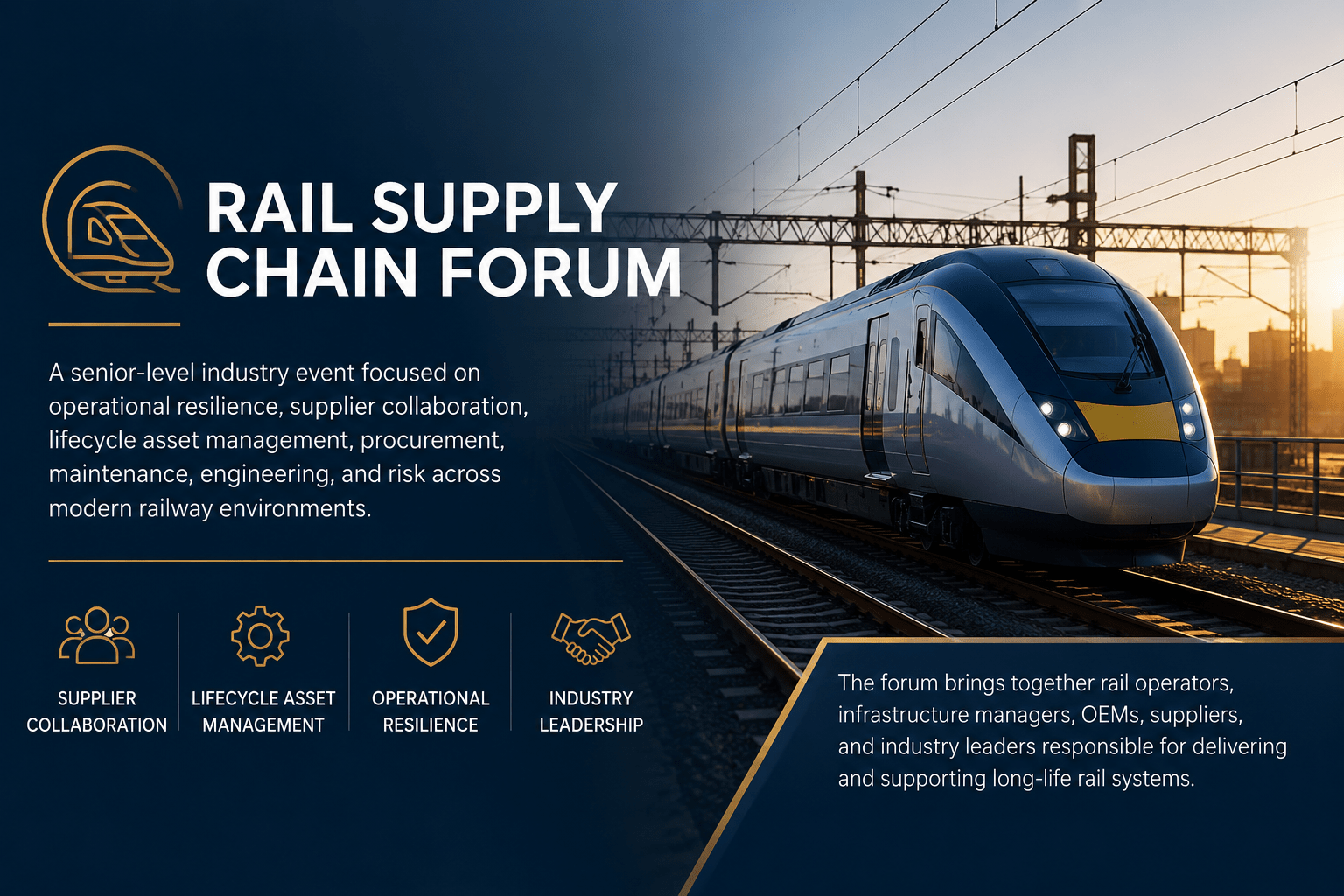
This question sits at the heart of the Rail Supply Chain Forum 2026, which takes place in London on 10 November.
Moving Beyond Procurement
The phrase “supply chain” often leads people to think about purchasing, contracts and supplier management. In reality, operational performance depends on much more than successful procurement.
Delivery decisions made during planning, engineering, programme management, systems integration, fleet introduction, maintenance and organisational change all have consequences for the railway that passengers experience every day.
A delayed programme, poor interface management, unclear responsibilities or incomplete engineering assurance can affect operational resilience long after a contract has been awarded.
The Forum has therefore been designed to examine supply chains as operational ecosystems rather than commercial transactions.
Why Integration Matters More Than Ever
Rail projects increasingly involve multiple organisations working simultaneously across infrastructure, rolling stock, signalling, digital systems, operations and maintenance.
While individual projects may perform well, integration across organisational boundaries remains one of the industry’s most difficult challenges.
Questions that continue to arise include:
- Who owns the interfaces between organisations?
- How is operational risk managed when responsibilities are shared?
- What information should clients, operators and suppliers be exchanging?
- How can engineering assurance evolve as programmes become more interconnected?
- What does operational readiness really mean before assets enter service?
These are not procurement questions. They are leadership questions.
Bringing Different Perspectives Together
One of the Forum’s strengths is the diversity of perspectives being brought together.
Contributors include senior leaders responsible for major investment programmes, railway strategy, organisational transformation, systems integration and programme delivery from organisations including Network Rail, DfT Operator Ltd, Anglia Railway and East West Railway Company, with further speakers continuing to be announced.
Rather than presenting a single view of the industry, the event has been structured to encourage discussion between organisations that often experience the same challenges from different perspectives.
Discussion Instead of Presentation
The programme combines short executive presentations with facilitated roundtables designed to encourage practical discussion rather than lengthy conference lectures.
Themes include:
- operating railways through increasingly complex delivery ecosystems;
- organisational readiness for major programmes;
- systems integration and engineering assurance;
- supplier collaboration and shared accountability;
- fleet performance and operational readiness;
- digital transformation and third-party operational risk;
- improving visibility across complex rail programmes.
The emphasis throughout is on practical experience, lessons learned and identifying opportunities for better collaboration across the sector.
Looking Ahead
The rail industry is entering a period of significant change. Investment programmes continue to grow in scale while organisations are expected to deliver greater reliability, efficiency and resilience across increasingly complex delivery environments.
Success will depend not only on technical capability, but on how effectively organisations work together across programme, operational and supplier boundaries.
The Rail Supply Chain Forum 2026 has been created to support those conversations and bring together the leaders responsible for making them happen.